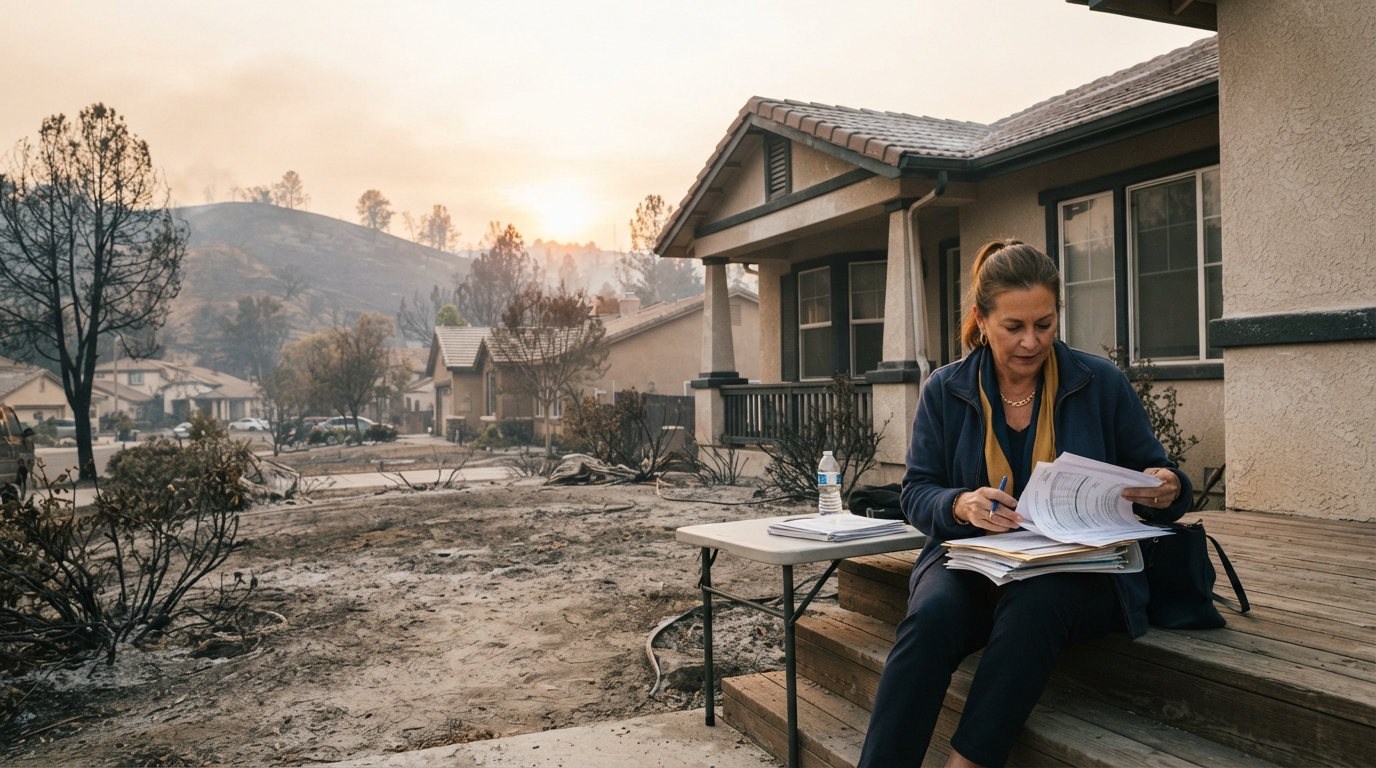
California wildfires can damage a home even when flames never reach it. Smoke, ash, soot, and other particles can travel far from the fire. They may enter homes through windows, vents, roofs, doors, and air systems.
This type of damage can create expensive cleanup problems. It can also lead to disagreements between homeowners and insurance companies.
California has now created clearer rules for these claims. Governor Gavin Newsom signed AB 1795, known as the Smoke Damage Recovery Act, in September 2026.
The law gives homeowners and insurers a clearer process for smoke damage claims. It covers testing, inspections, cleanup, temporary housing, and certain insurance payments.
However, the law does not guarantee payment for every claim. Coverage still depends on the insurance policy and the facts of the loss.
Homeowners should understand the new rules before they start repairs or throw away damaged property.

How the California Smoke Damage Recovery Act Works
The Smoke Damage Recovery Act focuses on homes that survive a wildfire but suffer smoke damage.
A home may look normal from the outside. Still, smoke particles can enter hidden areas. They may settle inside vents, attics, walls, furniture, carpets, and heating systems.
In some cases, homeowners may smell smoke long after the wildfire ends. In other cases, the damage may not be obvious without testing.
The new law creates a more organized process for handling these claims. It also explains when insurers should inspect, test, and evaluate affected homes.
You can also visit our Insurance & Claims section for more guides about California insurance disputes, claim delays, and coverage issues.
Wildfire Smoke Claims Get a Clearer Starting Point
One major part of the law involves homes inside a wildfire impact zone.
The law creates a presumption when smoke, ash, soot, char, or other wildfire particles appear inside a qualifying home.
In simple terms, the law may treat the wildfire as the likely source of the damage.
This rule gives homeowners a clearer starting point when they make a claim. It may also reduce disputes about where the smoke came from.
However, an insurer can still present evidence that shows another cause. Therefore, homeowners should continue to collect strong evidence.
Take photos and videos as soon as it is safe to enter the property. Record smoke stains, ash, damaged furniture, vents, windows, and other affected areas.
Also save evacuation notices, wildfire maps, local alerts, and other records. These documents can help show how close the property was to the fire.
Check Whether Your Home Is Inside the Impact Zone
The property’s location can affect how the new law applies.
California uses wildfire mapping and ZIP Code information to help identify affected areas. Because of this, homeowners should keep records that show the property’s location.
Do not depend on memory alone. Insurance claims can continue for weeks or months.
Create a simple timeline. Include the wildfire date, evacuation date, claim date, inspection date, and any repair dates.
This timeline can make conversations with adjusters much easier.
Insurers Must Follow Inspection and Testing Rules
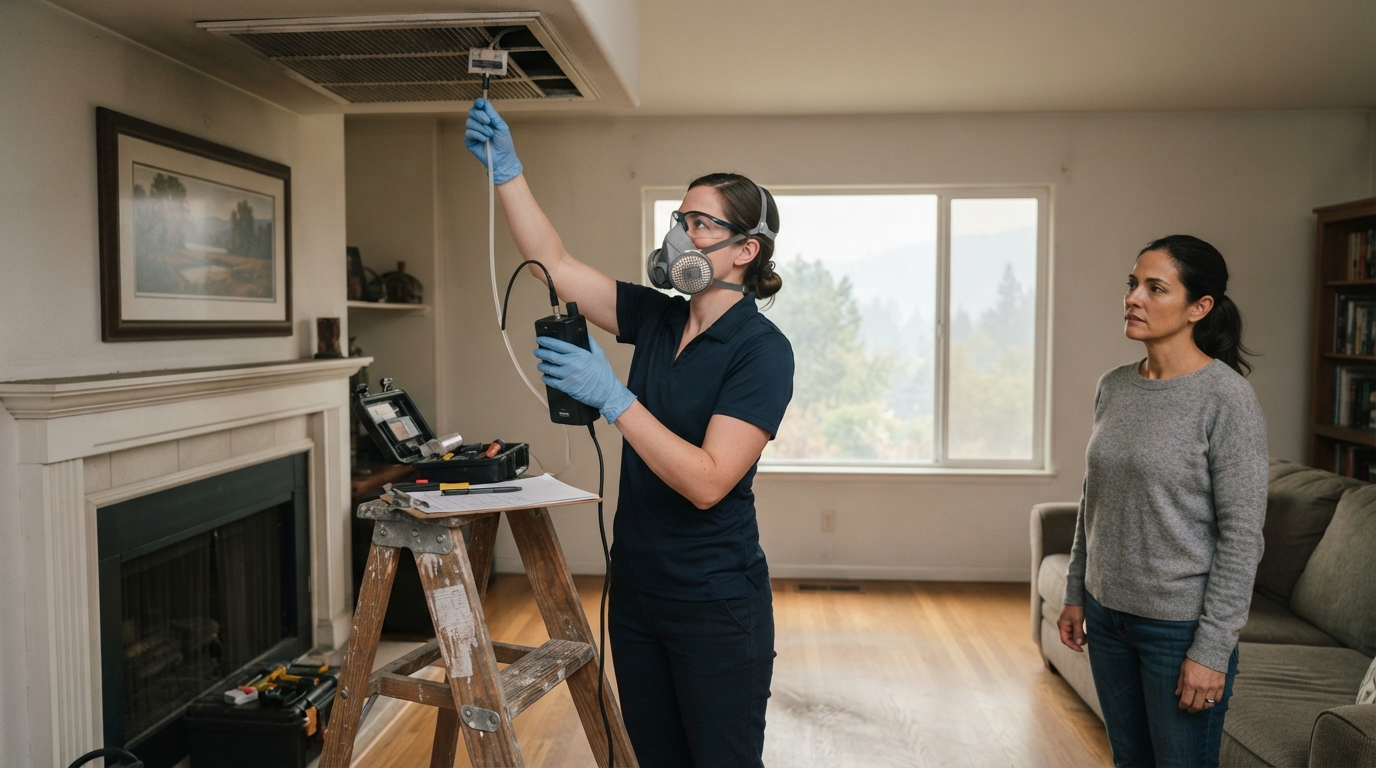
The law also creates rules for inspections and testing.
In many covered cases, the insurer must arrange an inspection within a set period after receiving the claim.
If government officials block access to the property, the timeline may start after they allow entry.
Homeowners should write down the date they reported the claim. They should also record the date of every inspection.
Ask the inspector what areas they plan to test. Also ask what type of testing they will use.
Keep copies of all reports. These records can help if a dispute develops later.
Insurance Payments and Temporary Housing
Smoke damage can affect more than walls and ceilings. It can also damage furniture, clothing, electronics, carpets, and other personal items.
Homeowners should create a list of damaged property. Add photos, purchase records, receipts, or other proof when possible.
Do not throw away expensive items too quickly. The insurer may want to inspect them first.
If an item creates a health or safety problem, take clear photos before removing it. Also keep a written record of why you removed it.
Insurance policies may calculate payments in different ways. Some policies use actual cash value first. Others may provide more money after the homeowner repairs or replaces damaged property.
Read the policy carefully. Look at deductibles, limits, exclusions, and replacement cost terms.
If you do not understand a payment, ask the insurer to explain it in writing.
Additional Living Expenses May Help During Repairs
Some homeowners cannot safely live in their homes during smoke cleanup.
In that situation, Additional Living Expense coverage may help. People often call this coverage ALE.
ALE may pay for certain extra costs caused by the loss. These costs may include temporary housing, meals, or other necessary expenses.
The new law adds protections for some wildfire smoke claims.
An insurer should not end qualifying ALE benefits simply because workers completed part of the cleanup. The home may still need more work before people can safely return.
However, policy limits still matter. Homeowners should track spending carefully.
Keep hotel receipts, rental agreements, meal receipts, and other records. Save written approvals from the insurer as well.
Before spending a large amount, ask the insurer whether the policy will cover it.
You Can Choose a Qualified Restoration Company
Smoke cleanup may require trained professionals.
The new law also addresses restoration work and repair estimates.
Homeowners should receive the documents that support an insurer’s repair estimate when the insurer uses that estimate to settle the claim.
This gives the homeowner a chance to review the proposed work.
You may also choose your own qualified restoration company, subject to the policy and applicable licensing rules.
Before hiring a company, check its license and background. Ask for a written estimate.
The estimate should explain the work, materials, price, and expected schedule.
Never sign a contract that you do not understand.
Wildfires often attract dishonest contractors. Some may pressure homeowners to sign quickly.
Visit our California Consumer Rights section for more information about contracts, scams, and unfair business practices.
What to Do After Wildfire Smoke Damages Your Home
Strong documentation can make an insurance claim easier to manage.
Start by taking photos and videos. Capture every room that may have smoke or ash damage.
Take close-up photos and wider photos. This gives the insurer more context.
Also photograph outdoor areas, windows, vents, garages, patios, cars, and other affected property.
Next, contact the insurance company as soon as possible.
Write down the claim number and the adjuster’s name. Save every email and letter.
Try to keep important conversations in writing.
If you speak by phone, write a short note after the call. Include the date, time, and key details.
You can also send a follow-up email. This creates a clear record.
Create a Complete Smoke Damage Claim File
Use one folder for all claim records.
You can use a physical folder, a cloud folder, or both.
Keep your insurance policy, photos, videos, inspection reports, estimates, receipts, and emails together.
Also keep a simple claim diary.
Write down every major event. For example, record when the adjuster visited and when a contractor provided an estimate.
This record can help if the insurer delays the claim or disputes part of it.
If the insurer denies coverage, ask for the reason in writing.
If the insurer rejects an estimate or test result, ask what evidence supports that decision.
Clear questions often lead to clearer answers.
Homeowners should also check official information from the California Department of Insurance.
The department regulates insurance companies in California. It also provides guides and updates for wildfire victims.
Read the California Department of Insurance website for current information about wildfire claims and consumer protections.
Some claims may become complicated. Large repair costs, health concerns, denied coverage, or strict deadlines can create serious problems.
In those cases, general information may not be enough.
A qualified professional can review the policy, inspection reports, repair estimates, and claim history.
You can also visit our Access to Justice section to learn more about California complaint processes, deadlines, agencies, and legal resources.
A home does not need to burn down to suffer major wildfire damage. Smoke and ash can create real cleanup costs.
The California Smoke Damage Recovery Act gives homeowners clearer rules for handling these claims.
Still, homeowners should take an active role.
Document the damage. Keep every record. Track deadlines. Review the policy. Ask questions in writing.
These simple steps can make the claim easier to understand and easier to manage.