
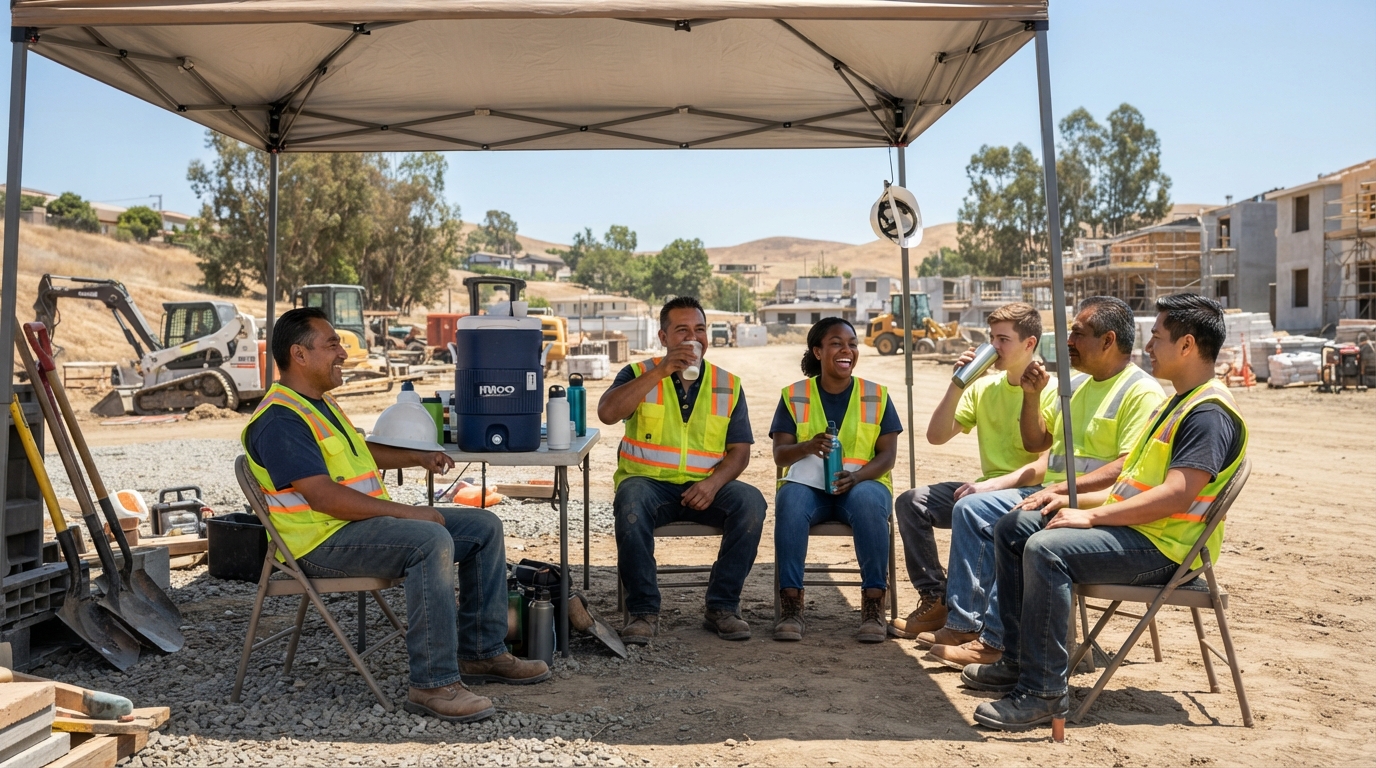
Extreme heat can turn an ordinary workday into a serious health risk. California workers face this danger in farms, construction sites, warehouses, restaurants, factories, delivery routes, and many other workplaces.
California has specific heat illness rules for both indoor and outdoor work. These rules require employers to take steps that help workers stay safe during hot conditions.
Those protections include drinking water, shade or cool-down areas, rest periods, training, and emergency plans.
The rules matter even more during heat waves. In September 2026, Cal/OSHA again warned employers about dangerous temperatures across California. Some areas faced triple-digit heat.
Workers should know what employers must provide. They should also know what to do when heat starts causing symptoms.
This guide explains the main California heat illness rules in simple terms. It also explains the difference between indoor and outdoor protections.
California Heat Rules for Indoor and Outdoor Work
California uses separate heat illness standards for indoor and outdoor workplaces. Some employers may need to follow both sets of rules.
For example, a company may have workers inside a warehouse and others loading trucks outside. Different protections may apply based on where each employee works.
Workers can learn more about other job protections in our California Workplace Rights section.
Outdoor Workers Have Rights to Water, Shade, and Rest
California’s outdoor heat rules apply to many workers who perform their jobs outside.
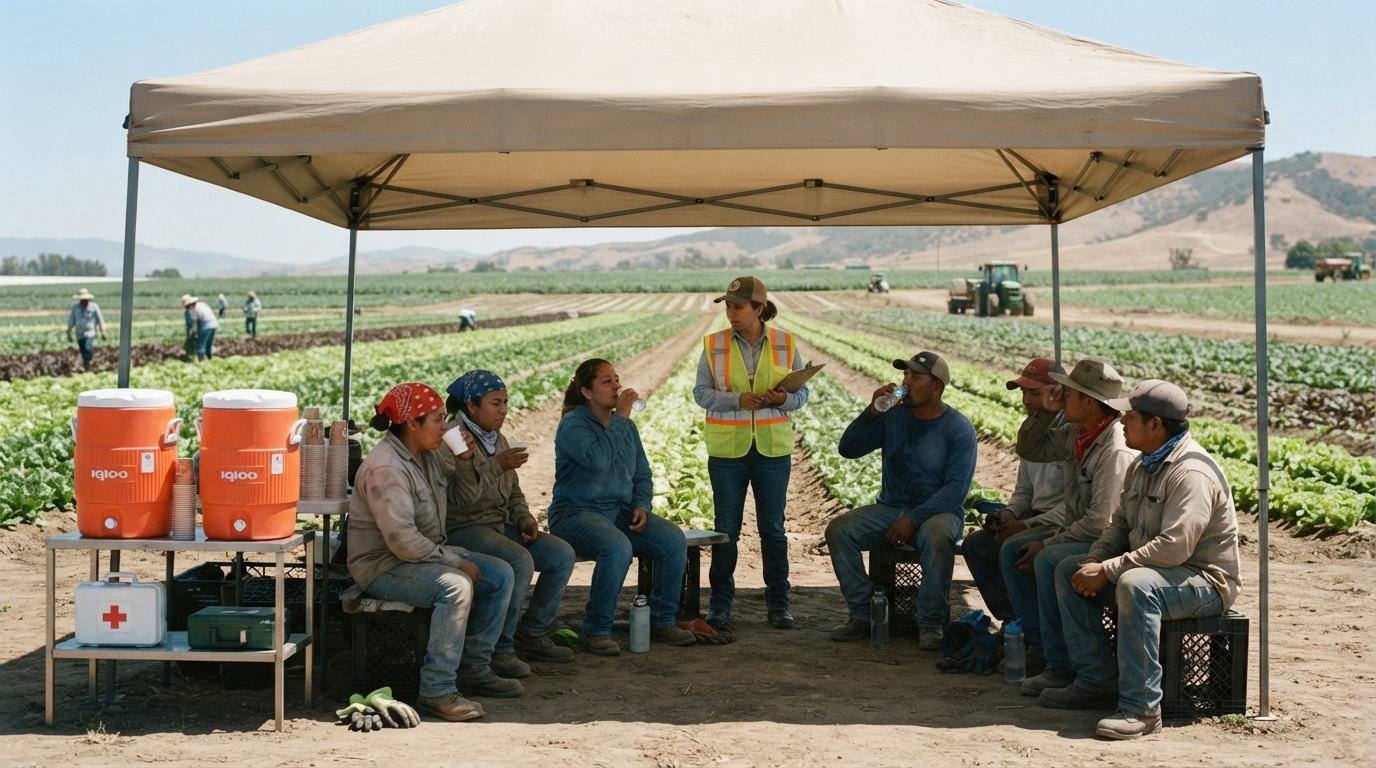
Employers must provide fresh and suitable drinking water. The water must also be free to employees and located as close to the work area as practical.
When an employer does not have a continuous water supply, the employer must provide enough water for the work shift. The standard requires enough water to allow each worker to drink at least one quart per hour.
Workers should not wait until they feel very thirsty. Frequent drinking can help the body manage heat before symptoms become severe.
Employers must also give workers access to preventative cool-down rest periods when needed.
A worker does not need to wait until a medical emergency develops before requesting a cool-down period.
Shade Rules Become Important Above 80 Degrees
Outdoor employers must have shade ready when the temperature rises above 80 degrees Fahrenheit.
The shade must provide enough room for workers who are taking rest or recovery periods. Workers should be able to sit normally without crowding each other.
The shade should also be as close to the work area as practical.
When the temperature is 80 degrees or lower, workers can still request access to shade.
A worker who takes a preventative cool-down rest should have enough time to recover.
The employer should monitor the worker for signs of heat illness. The worker should not return to work while symptoms continue.
California’s rule also sets a minimum recovery period. A worker should receive at least five minutes in the shade, in addition to the time needed to reach the shaded area.
Extra Procedures Apply at 95 Degrees
Outdoor employers face additional duties when the temperature reaches 95 degrees Fahrenheit.
At that point, employers must use high-heat procedures.
For example, supervisors must maintain reliable communication with workers. Employers must also watch workers for signs of heat illness.
A buddy system may help meet this requirement. A supervisor may also monitor a smaller group directly.
Employers must identify someone who can call emergency medical services when needed. Workers must also have a way to request emergency help.
In addition, employers should remind workers to drink water throughout the shift.
Employers must hold a pre-shift meeting to review high-heat procedures. That meeting should also remind employees about water and cool-down rests.
Agricultural workers receive additional protections at this temperature. California requires certain preventative cool-down rest periods when agricultural employees work in temperatures of 95 degrees or higher.
Indoor Workers Also Have Heat Protections
Heat illness is not only an outdoor problem.
Warehouses, kitchens, factories, laundries, shipping areas, and other indoor spaces can become dangerously hot.
California’s indoor heat illness standard generally applies when an indoor work area reaches 82 degrees Fahrenheit while employees are present.
Some exceptions exist. Therefore, workers and employers should check the full Cal/OSHA rule when they need to determine whether a specific workplace qualifies.
The indoor standard requires employers to provide drinking water, training, cool-down areas, and emergency procedures.
The rules become more detailed under certain higher-risk conditions.
For example, additional requirements can apply when the temperature or heat index reaches 87 degrees.
They may also apply at 82 degrees when workers wear clothing that restricts heat removal. The same can apply when workers face strong radiant heat.
Indoor Workers Need a Cool-Down Area
Employers covered by the indoor standard must provide a suitable cool-down area.
The area must be available while employees are present.
It should provide enough space for workers to sit normally during rest periods. In most cases, the employer should keep that area below 82 degrees Fahrenheit.
Workers must also be able to take a preventative cool-down rest when they feel the need.
Employers should encourage these rests instead of waiting for someone to become seriously ill.
If a worker reports symptoms, the employer must respond.
The worker should not simply return to a hot work area while symptoms continue.
Employers may also need to reduce workplace heat through engineering controls.
For example, they may use air conditioning, ventilation, fans, insulation, or other cooling systems.
When those steps cannot fully control the heat, employers may need administrative controls. These can include changing schedules, rotating employees, reducing work intensity, or adding rest periods.
Workers who want to understand other safety protections can visit our Workplace Rights resource center.
What California Workers Can Do During Dangerous Heat
Heat illness can become serious very quickly. Workers should not ignore early warning signs.
Symptoms may include heavy sweating, headache, dizziness, weakness, nausea, cramps, confusion, or unusual behavior.
Severe symptoms need immediate attention.
A person who becomes confused, loses consciousness, vomits, staggers, or has a seizure may face a medical emergency.
Workers should report symptoms as soon as possible. They should also speak up when a coworker appears ill.
Waiting can make the condition worse.
Know the Warning Signs and Speak Up Early
Workers should learn the employer’s emergency procedures before a heat emergency happens.
They should know where to find water and cool-down areas. They should also know who to contact when someone becomes sick.
New workers deserve special attention because their bodies may not have adjusted to hot conditions.
This adjustment process is called acclimatization.
California rules require closer observation in certain situations involving new workers or heat waves.
Workers should also remember that personal factors can affect heat risk. Heavy clothing, physical effort, protective equipment, and high humidity can make the body hotter.
Because of this, the outdoor temperature alone does not always show the full risk.
Keep Records if Heat Protections Are Missing
If a workplace repeatedly lacks water, shade, cool-down areas, or heat procedures, workers can keep basic records.
Write down the date and time. Note the temperature when possible.
Record what happened and who received the report.
Workers may also save workplace messages, schedules, photos, or other records when they can do so legally and safely.
These records can help explain a problem if the worker later needs to report unsafe conditions.
California safety rules also protect workers who exercise workplace safety rights from unlawful retaliation.
Workers should not have to choose between protecting their health and keeping quiet about unsafe conditions.
For official guidance, review the Cal/OSHA Heat Illness Prevention resources. The state provides information for both workers and employers.

If a worker faces a serious workplace dispute, general information may not be enough.
Deadlines can apply to complaints, retaliation claims, injuries, and other workplace matters.
Our Access to Justice section explains how Californians can organize records, find government resources, and prepare before seeking professional help.
California’s heat rules give workers important protections. However, those protections work best when employees understand them.
Employers should prepare before temperatures rise. They should provide water, rest, training, and safe places to cool down.
Workers should watch for symptoms and report problems early.
During extreme heat, a short break, a shaded area, or quick access to water can make a major difference.
Browse the Cali Advocate resource library for more California guides on workplace rights, consumer protection, insurance, transportation, and public safety.